They Disagreed — Episode 01 · Season 6
New Series — They Disagreed

Slavery at the Constitutional Convention

What Madison's Notes Actually Show.
The Speeches. The Deal. The Three Clauses.

The Constitutional Convention of 1787 produced a document containing three separate provisions protecting slavery. Madison's Notes record what delegates said on the floor. This episode goes to those notes.

Episode Length

~18 minutes

Primary Sources

9 confirmed documents

Archives

Yale Avalon · National Archives

Series

They Disagreed · Episode 01

The United States Constitution, signed September 17, 1787, contained three provisions directly related to slavery: the Three-Fifths Clause, the Slave Trade Clause, and the Fugitive Slave Clause. Madison's Notes on the Federal Convention debates record what delegates argued on the floor before those provisions were adopted. This episode presents those debates from the primary record.

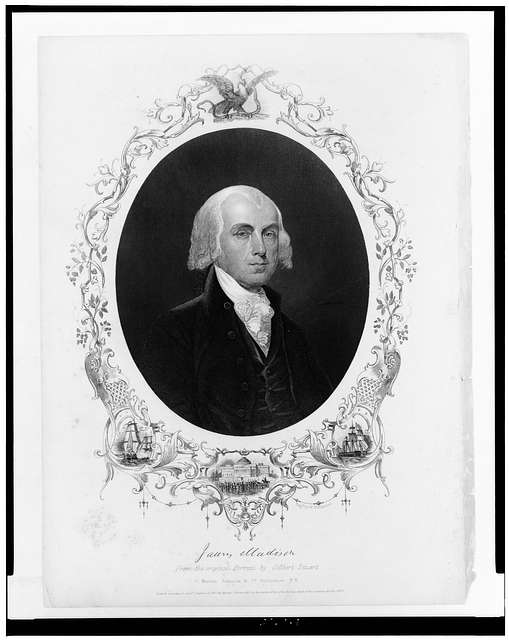
James Madison kept the most complete record of the Constitutional Convention's proceedings. His Notes were not published until after his death in 1836. They record the speeches, the motions, the votes, and — in one critical footnote — Madison's own account of the private deal that shaped the outcome on slavery. The full text is at the Yale Avalon Project. Every quote in this episode is from that source.

01
August 8, 1787 · Madison's Notes
The Three-Fifths Clause — The Debate on the Floor

The Three-Fifths Clause — Article I, Section 2, Clause 3 of the Constitution — counted enslaved people as three-fifths of a person for the purpose of apportioning congressional seats and direct taxes. On August 8, 1787, Gouverneur Morris of Pennsylvania moved to insert "free" before the word "inhabitants" in the apportionment article. The motion would have excluded enslaved people from the count entirely. Madison recorded his speech in full.

Convention Floor Record — August 8, 1787 · Three-Fifths Clause Debate
Madison's Notes · Yale Avalon Project · avalon.law.yale.edu/18th_century/debates_808.asp
Gouverneur Morris
Pennsylvania
Against Three-Fifths

"He never would concur in upholding domestic slavery. It was a nefarious institution. It was the curse of heaven on the States where it prevailed."

"The admission of slaves into the Representation when fairly explained comes to this: that the inhabitant of Georgia and S. C. who goes to the Coast of Africa, and in defiance of the most sacred laws of humanity tears away his fellow creatures from their dearest connections & damns them to the most cruel bondages, shall have more votes in a Govt. instituted for protection of the rights of mankind, than the citizen of Pennsylvania or New Jersey, who views with a laudable horror so nefarious a practice."

Morris moved to insert "free" before "inhabitants." The motion would have excluded enslaved people from the apportionment count. The motion failed. The Three-Fifths Clause remained.

Source: Madison's Notes · August 8, 1787 · Avalon Project Yale →

The Three-Fifths Clause as adopted reads: "Representatives and direct Taxes shall be apportioned among the several States which may be included within this Union, according to their respective Numbers, which shall be determined by adding to the whole Number of free Persons, including those bound to Service for a Term of Years, and excluding Indians not taxed, three fifths of all other Persons." The words "slave" and "slavery" do not appear in the clause. "All other Persons" is the constitutional language for enslaved people throughout the document.

02
August 21–22, 1787 · Madison's Notes
The Slave Trade Debates — What Each Side Argued

On August 21 and 22, 1787, the Convention debated the slave trade clause directly. The positions of multiple delegates are recorded verbatim in Madison's Notes. The debate presents the constitutional argument on each side as it was actually made on the floor.

Convention Floor Record — August 21–22, 1787 · Slave Trade Debate
Madison's Notes · Yale Avalon Project · avalon.law.yale.edu/18th_century/debates_821.asp · debates_822.asp
Luther Martin
Maryland
Against Slave Trade Clause

"It was inconsistent with the principles of the revolution and dishonorable to the American character to have such a feature in the Constitution."

Martin proposed allowing Congress to prohibit or tax the importation of enslaved people. He argued on three grounds: that the Three-Fifths Clause incentivized the trade, that enslaved people weakened the Union militarily, and that protecting the slave trade was incompatible with revolutionary principles.

Source: Madison's Notes · August 21, 1787 · Avalon Project Yale →
John Rutledge
South Carolina
For Slave Trade Clause

"Religion & humanity had nothing to do with this question. Interest alone is the governing principle with nations. The true question at present is whether the Southn. States shall or shall not be parties to the Union."

Rutledge stated the Southern position directly: participation in the Union was contingent on protection of the slave trade. He framed the question as interest, not morality, and made clear the consequence of the Convention not agreeing.

Source: Madison's Notes · August 21, 1787 · Avalon Project Yale →
Charles Pinckney
South Carolina
For Slave Trade Clause

"South Carolina can never receive the plan if it prohibits the slave trade. In every proposed extension of the powers of Congress, that State has expressly & watchfully excepted that of meddling with the importation of negroes."

Pinckney stated South Carolina's position as a fixed condition. The slave trade was not a matter for negotiation. The Convention could not prohibit it and expect South Carolina's ratification.

Source: Madison's Notes · August 21, 1787 · Avalon Project Yale →
George Mason
Virginia
Against Slave Trade Clause

"This infernal trafic originated in the avarice of British Merchants. The British Govt. constantly checked the attempts of Virginia to put a stop to it. The present question concerns not the importing States alone but the whole Union."

"Every master of slaves is born a petty tyrant. They bring the judgment of heaven on a Country. As nations can not be rewarded or punished in the next world they must be in this. By an inevitable chain of causes & effects providence punishes national sins, by national calamities."

Mason's August 22 speech argued against the slave trade on moral, economic, and providential grounds. He also addressed the military risk: enslaved people, if armed by the British, "would have proved dangerous instruments in their hands." Mason held more than 100 enslaved people at Gunston Hall and freed none. The Convention retained the slave trade clause. Mason ultimately refused to sign the Constitution.

Source: Madison's Notes · August 22, 1787 · Avalon Project Yale →
Oliver Ellsworth
Connecticut
For leaving clause as-is

"Let every State import what it pleases. The morality or wisdom of slavery are considerations belonging to the States themselves. What enriches a part enriches the whole, and the States are the best judges of their particular interest."

Ellsworth argued the Convention had no mandate to address slavery. He had never enslaved anyone. His position was procedural — the Convention was not the appropriate body to resolve the question — rather than a defense of slavery on the merits.

Source: Madison's Notes · August 21, 1787 · Avalon Project Yale →
03
August 25 & 29, 1787 · Madison's Notes
The Deal — Navigation Acts for Slave Trade Protection

The slave trade clause was not resolved by the floor debate. It was resolved by a private agreement between Northern and Southern delegates — documented by Madison himself in a footnote to his August 29 entry. The terms of the deal: the South would agree to allow Congress to pass navigation acts by simple majority (which Northern shipping interests wanted), and in exchange, Congress would be prohibited from banning the slave trade until 1808.

"

An understanding on the two subjects of navigation and slavery, had taken place between those parts of the Union, which explains the vote on the motion depending, as well as the language of Gen. Pinkney & others.

James Madison · Footnote · Madison's Notes · August 29, 1787 · Yale Avalon Project Avalon Project →

The vote on the slave trade protection clause took place on August 25, 1787. The clause prohibited Congress from banning the importation of enslaved people before 1808 — a twenty-year protection from the date of ratification. Madison recorded his own reaction: "Twenty years will produce all the mischief that can be apprehended from the liberty to import slaves. So long a term will be more dishonorable to the National character than to say nothing about it in the Constitution." The vote passed seven states to four.

04
August 28, 1787 · Madison's Notes
The Fugitive Slave Clause

On August 28, 1787, Pierce Butler and Charles Pinckney of South Carolina moved to require that escaped enslaved people be returned across state lines. Madison recorded the motion and the response directly.

"

Mr. BUTLER and Mr. PINKNEY moved "to require fugitive slaves and servants to be delivered up like criminals."

James Madison · Recording Butler and Pinckney's Motion · Madison's Notes · August 28, 1787 · Yale Avalon Project Avalon Project →

Roger Sherman of Connecticut objected — not on moral grounds but on practical ones. Madison recorded: "Mr. SHERMAN saw no more propriety in the public seizing and surrendering a slave or servant, than a horse." Butler withdrew the motion temporarily. It was reintroduced and, in its final form, became Article IV, Section 2, Clause 3 of the Constitution. The word "slave" does not appear in the clause as ratified.

05
The Constitution · September 17, 1787
The Three Clauses — As Adopted

The Constitution signed on September 17, 1787 contained three provisions directly protecting slavery. None uses the words "slave" or "slavery." The language is documented at the National Archives.

The Three Slavery Clauses in the Constitution
National Archives · archives.gov/founding-docs/constitution-transcript · Ratified 1788
I
The Three-Fifths Clause
Article I · Section 2 · Clause 3

"Representatives and direct Taxes shall be apportioned among the several States... by adding to the whole Number of free Persons... three fifths of all other Persons."

Counted enslaved people as three-fifths of a person for apportioning congressional seats and direct taxes. Gave slaveholding states additional political representation based on the size of their enslaved populations. Debated primarily August 8, 1787. Eliminated by the Fourteenth Amendment (1868).

Source: National Archives · archives.gov →
II
The Slave Trade Clause
Article I · Section 9 · Clause 1

"The Migration or Importation of such Persons as any of the States now existing shall think proper to admit, shall not be prohibited by the Congress prior to the Year one thousand eight hundred and eight."

Prohibited Congress from banning the international slave trade for twenty years from ratification. Debated August 21–25, 1787. The deal between Northern and Southern delegates is documented in Madison's footnote to August 29. Congress banned the trade effective January 1, 1808 — the earliest permitted date.

Source: National Archives · archives.gov →
III
The Fugitive Slave Clause
Article IV · Section 2 · Clause 3

"No Person held to Service or Labour in one State, under the Laws thereof, escaping into another, shall, in Consequence of any Law or Regulation therein, be discharged from such Service or Labour, but shall be delivered up on Claim of the Party to whom such Service or Labour may be due."

Required free states to return escaped enslaved people to their enslavers. Introduced August 28, 1787 by Butler and Pinckney of South Carolina. The Thirteenth Amendment (1865) rendered the clause unenforceable by abolishing slavery.

Source: National Archives · archives.gov →
✦ WHAT THE RECORD SHOWS ✦
They Disagreed — Series
The Founding Record Is Not a Single Position

Madison's Notes record delegates arguing against the slave trade on the Convention floor — and record the same Convention adopting three clauses that protected it. Both facts are in the primary record. The speeches against slavery and the provisions protecting it are in the same document, recorded by the same hand.

This series goes to the primary record for the founding's disagreements. Not to resolve them — the record does not do that — but to show what the arguments actually were, stated at the level they were actually made. Every claim sourced. Every document linked. The archive is open.

Go Deeper — Primary Sources
Every claim in this episode verified at these archives · All URLs confirmed live
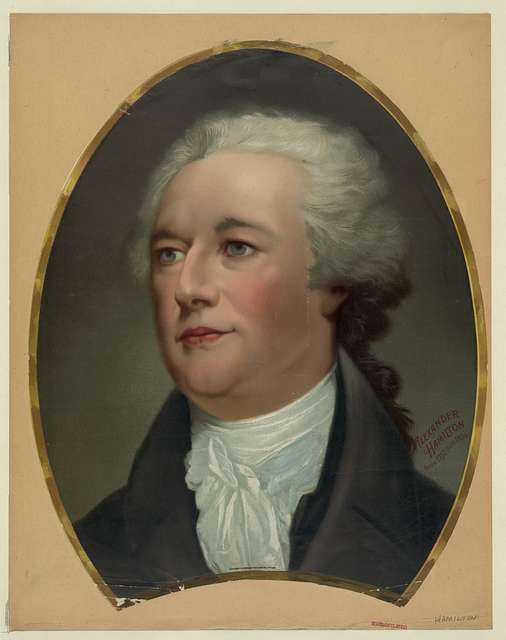
Hamilton vs. Jefferson — On Debt, Banks, and the Meaning of the Constitution
The first great policy disagreement of the new government. Both men left a written record. Both records are at Founders Online.
Follow the archive on X
@foundersrecord →
Follow the archive
Subscribe · Substack → X · @foundersrecord →