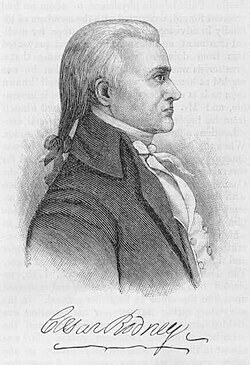
Three primary documents from the Delaware delegate who rode through a thunderstorm to break his state's tie vote on independence. His own account of the ride in a letter to his brother. His vote on July 2. His signature on August 2.
Caesar Rodney was born October 7, 1728 near Dover, Delaware, the son of a prosperous farmer. He held nearly every major public office in Delaware colonial government, justice of the peace, sheriff, register of wills, assemblyman, speaker, captain of militia, and brigadier general. He was one of Delaware's three delegates to the Continental Congress from 1774 onward.
In late June 1776, as the Congress moved toward a vote on independence, Rodney was not in Philadelphia. He had returned to Delaware to put down Loyalist unrest in Sussex County. This meant that of Delaware's three delegates, Rodney, Thomas McKean, and George Read, only two were present. McKean was in favor of independence. Read was against it. Delaware's vote was deadlocked. Without Rodney, Delaware could not support independence.
Thomas McKean sent a rider to Rodney in Dover with an urgent message: come to Philadelphia immediately. The vote on independence was the next morning. Rodney received the message on the evening of July 1 and rode through the night. The road between Dover and Philadelphia was approximately eighty miles. It was raining heavily. Rodney had been suffering from facial cancer and asthma for years.
He arrived at Independence Hall on July 2, 1776, still in his boots and spurs from the road, muddy and exhausted from the eighteen-hour ride. He had arrived in time.
I arrived in Congress tho detained by thunder and rain time enough to give my voice in the matter of independence, and tho I have not had the pleasure of your Company I have the pleasure to inform you that we have now got through the whole of the declaration and ordered it to be printed so that you will soon have the pleasure of seeing it.
Rodney's vote on July 2 gave Delaware to the independence column and helped produce the unanimous vote Congress needed. He signed the Declaration on August 2, 1776. During the war he served as President of Delaware from 1778 to 1782, managing the state's war effort under British military pressure. He also commanded Delaware's militia forces in the field.
The cancer that had afflicted his face for years worsened throughout the war. He wrote to his brother in 1780 describing the tumor on his cheek and asking about treatment options in Philadelphia. By 1782 his health had declined enough that he could not continue in office. He died on June 26, 1784, at fifty-five, at his farm Byfield near Dover. He was reinterred at Christ Church Burial Ground in Dover. His equestrian statue stands in Rodney Square in Wilmington, Delaware.
If you learned something new or just enjoyed the content, please share it and follow along on X and Substack. This page runs on a passion for our shared history, and a steady supply of caffeine. If you're able, consider buying a coffee. It goes a long way toward keeping the content coming, and helps the project grow into new mediums down the road. My sincere thanks.